Why so many smokers in Mauritius turn to the nicotine patch first
It is often the first thing a smoker picks up when the decision is made. In Mauritius, nicotine replacement products are sold over the counter in pharmacies, without a prescription, and they are also part of the free support offered by the public tobacco cessation clinics found in each health region. The nicotine patch is easy to find, discreet to wear and simple to use, which explains why it remains the most familiar option.
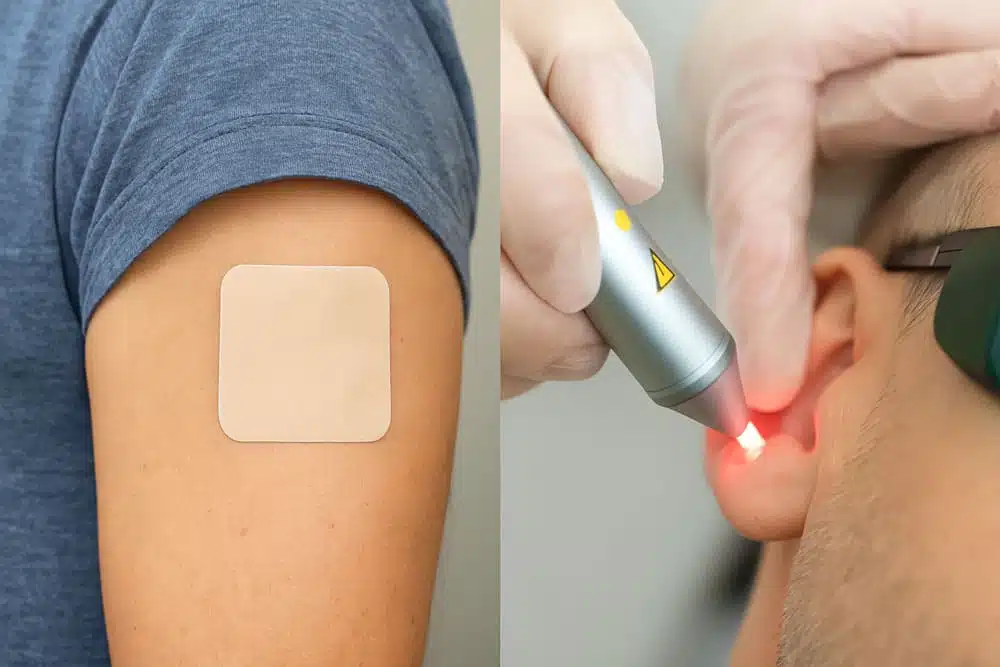
The principle is straightforward. Stuck on the skin each morning, the patch releases a steady dose of nicotine into the bloodstream over sixteen or twenty-four hours. The aim is to soften the physical side of quitting: irritability, restlessness and the sharp cravings that tend to appear in the first days without cigarettes.
What a nicotine patch does, and what it leaves untouched
The patch works on one front only: the body’s need for nicotine. The dose is reduced in stages, usually over eight to twelve weeks, so that the body adapts gradually. For some smokers this is enough. For many others, the difficulty lies elsewhere.
Smoking is also a set of gestures and rituals. The cigarette after the morning coffee, the break with colleagues, the one lit on the way home in traffic: none of these moments disappears because nicotine is still being supplied through the skin. This is why a number of patch users find themselves smoking again while still wearing one, or relapse a few weeks after the treatment ends.
Used correctly, the patch remains a recognised and widely recommended aid to stopping smoking, and it can be combined with other forms of nicotine replacement under professional guidance. It is simply worth knowing what it addresses before choosing it, and asking a pharmacist or doctor to adjust the dosage to your consumption.
It is also worth knowing that the two approaches do not rest on the same level of evidence. Nicotine replacement therapy is among the treatments recommended by the World Health Organization to help adults stop smoking. For complementary approaches, including laser-based methods, the WHO considers that the available studies are not yet sufficient to issue a recommendation either for or against them (WHO guideline on tobacco cessation).
laserOstop does not present itself as a medical procedure, and its approach is best judged by the experience of those who have tried it. Across the world, the network has gathered more than 20,000 Google reviews, most of them positive, in which clients describe their session, the support they received and the way they left cigarettes behind.
How a laserOstop session takes a different route
The laserOstop approach does not rely on supplying nicotine. During a session of about one hour, a soft laser is applied to specific points on the ear, the face and the hands. The method, inspired by auriculotherapy, is painless and involves neither needles nor medication. It does not involve nicotine products, and it can be discussed with your doctor if you are already using other aids.
The session is preceded by a conversation with an advisor, who looks at the smoker’s habits, the moments when the urge is strongest and the reasons behind the decision. This step matters as much as the laser itself: it helps the person anticipate the situations in which the old reflex will try to return.
Two different rhythms: a programme over several weeks or a single session followed up all year
The two approaches are not built on the same timescale. A patch programme is spread over two to three months, with the dose reduced in stages. Patches can be bought in pharmacies or obtained through the public tobacco cessation clinics, which also offer free advice. The laserOstop approach is concentrated in a single session, followed by support that continues throughout the year. Fees vary from one centre to another, so it is best to ask the centre directly.
The way difficult moments are handled also differs. With patches, an occasional cigarette does not mean the programme has failed: health authorities advise continuing the treatment and getting back on track the next day. At laserOstop, the follow-up offered throughout the year, along with the 12-month guarantee, gives the person a point of contact if the urge to smoke returns.
Choosing according to your own smoking profile
There is no single answer that fits every smoker. Someone who smokes a few cigarettes a day and is mainly driven by habit will not have the same needs as a heavy smoker who lights the first cigarette on waking. Previous attempts are also useful clues: if patches have already been tried without lasting success, it may be time to explore another path rather than repeat the same programme.
What counts above all is to choose an approach you feel comfortable with, and to surround yourself with support. Family, colleagues and professionals all play a part in the weeks that follow.
laserOstop Mauritius: a single session and a year of support
Some smokers prefer not to rely on nicotine products for several months. For them, laserOstop proposes an exclusive method, carried out in a single session with equipment designed for this purpose. The conversation with your advisor helps you anticipate the moments that will be hardest, and the follow-up remains available all year.
If you would like to discuss your situation with an advisor, book your appointment at our Ébène or Pereybere centre and take your first step towards a smoke-free life.
Frequently asked questions about nicotine patches and laserOstop
Can I buy a nicotine patch without a prescription in Mauritius?
Yes. Nicotine replacement products are sold over the counter in pharmacies. Public tobacco cessation clinics can also provide advice and support free of charge.
How long should a nicotine patch programme last?
Most programmes last between eight and twelve weeks, with the dose reduced in stages. A pharmacist or doctor can help adjust it to your consumption.
Can I smoke while wearing a nicotine patch?
It is strongly discouraged, as combining the two increases the amount of nicotine in the body. If you smoke while using patches, talk to a health professional.
Can I book a laserOstop session after trying patches?
Yes. Many people come to laserOstop after one or more attempts with nicotine replacement products. Simply tell your advisor which products you are currently using when you book.
How long does a laserOstop session take?
Allow about one hour, including the conversation with your advisor and the laser session itself.